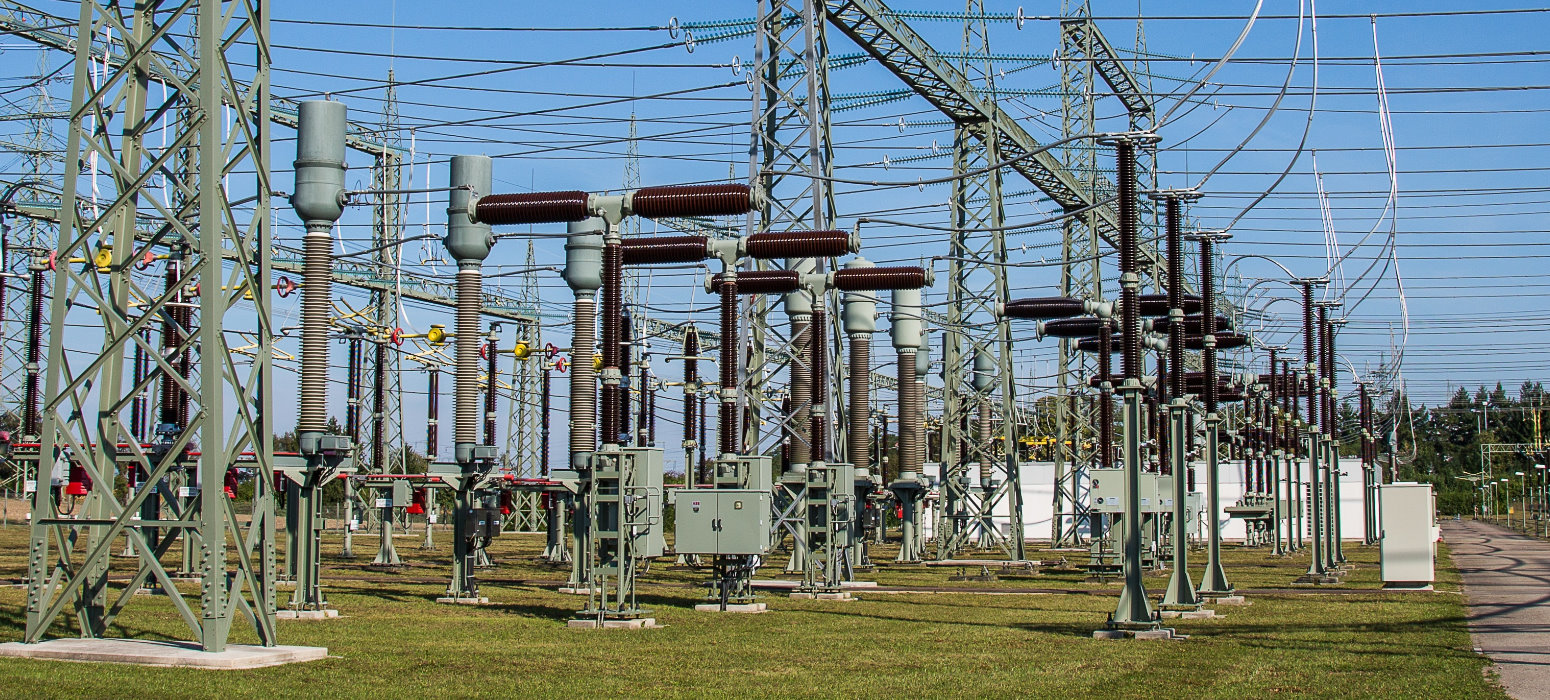
From capacity to quality: the hidden limits of a congested power grid

Making better use of the existing grid is now the guiding principle of Dutch grid congestion policy. Batteries, flexible connections and actively controlled power electronics are expected to free up room on a grid that is already full. But the closer we operate to its technical limits, the more the quality of current and voltage determines how much room there really is.
The pressure is high as ever. Recently, eleven industry associations sent an urgent open letter to the Netherlands Authority for Consumers and Markets. They object to the down payment that regional grid operators now require for a place in the connection queue: 20 percent of the connection costs. At the same time, the port of Rotterdam shows what technical solutions can achieve. TenneT, the Port of Rotterdam Authority, Deltalinqs and Stedin developed measures that allow some of the waiting companies to be connected sooner.
Batteries as a new layer in the grid
Battery storage is also expected to create room. RWE, owner of the power plant in Moerdijk among others, has made a final decision to build a 400 megawatt battery with 1,100 megawatt hours of storage at the site. Through capacity management agreements with TenneT it should free up room for parties in the queue. The battery can also provide grid services such as inertia.
Behind the meter, things are moving just as fast. In the first half of 2026 grid operators registered a record 30,856 new batteries with a combined capacity of more than 800 megawatts. Netbeheer Nederland, the association of Dutch grid operators, is also urging installers through new toolkits to get more out of existing connections. As a result, more switching power electronics end up behind the same connection.
The margins lie at the edges
Using the grid more intensively means running into limits other than thermal ones. TenneT raised the limits on 113 grid circuits and gained tens of megawatts as a result. But in these and some 500 similar cases, possible limits for electromagnetic compatibility are coming into view. The low voltage grid shows that targeted technical analysis pays off. After voltage problems were tackled structurally rather than case by case, the number of outages in the Enexis service area fell from 1,400 in 2023 to 1,000 in 2025.
One inverter, two perspectives
The inverter plays the leading role in each of these developments. It determines how much harmonic and supraharmonic emission an installation causes, how sensitive it is to voltage dips and how it responds to control signals or provides grid support itself. Anyone who designs, connects or assesses such installations therefore needs to look both ways. From the grid side, the question is what the installation does to voltage quality. From the equipment side, the question is how it holds up in an increasingly crowded electromagnetic environment. The room that making better use of the grid should deliver, lies precisely where these two perspectives meet.
Deepen your technical expertise
These two perspectives are at the core of two PAOTM courses.
The Dutch two-day course Power quality led by Professor Sjef Cobben (TU/e) covers the grid perspective: voltage dips and flicker, harmonic pollution, unbalance, transients and monitoring based on practical cases. The English six-day course Electromagnetic compatibility led by Dr. Lex van Deursen (TU/e) covers the equipment and system side, including EMC in large systems, nonlinear phenomena and transients. In both courses you gain the latest knowledge and put it straight to work for the grid capacity of tomorrow.
Program manager

Why PAOTM
-
The latest post-academic knowledge and skills
-
Focused on questions that arise in a technical environment
-
Interactive and directly applicable in practice
-
Top teachers from science, research and business