Expert and effective teacher: the power of didactics
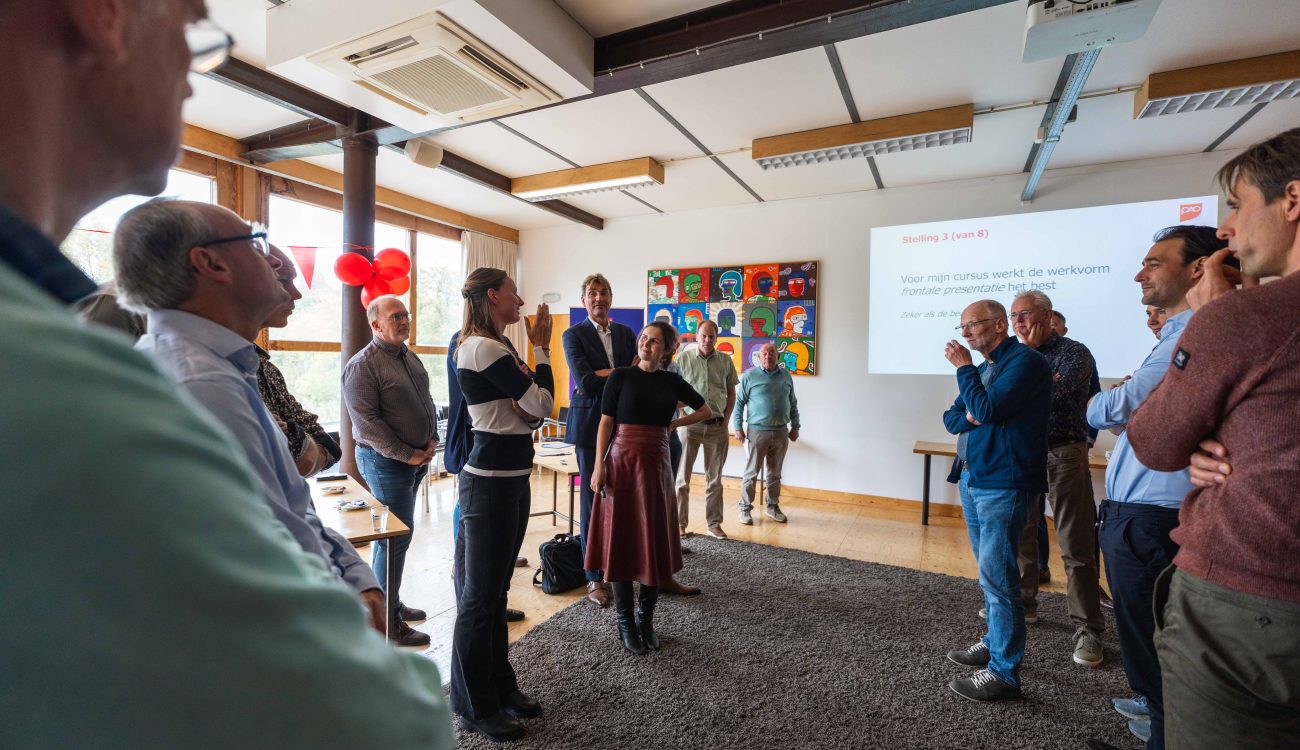
Technical experts have valuable knowledge and often have the ambition to share it. In post-academic education, we see it every day: passionate experts who are eager to share their expertise while searching for the most effective way to do so. Teaching is not just about transferring knowledge. It is about ensuring that participants approach their work differently tomorrow. Not by just sharing more information, but by teaching with purpose.
One person who knows better than anyone how to become a successful teacher is Maya de Waal. Maya works at Hogeschool Rotterdam, where she is responsible for risk, compliance, and audit. With a background in political science, public administration and teacher education, she has spent years operating at the intersection of education and organizations. She previously worked at NVAO, where educational quality is central. Since 2019, Maya has been teaching the Train the Trainer for engineers course at PAOTM. We spoke to her about the importance of didactics, her experiences with PAOTM lecturers and how she helps them bring out the best in themselves.
Didactics: from transmitting to learning
According to Maya, the traditional view of education, in which an expert transfers knowledge through a presentation, has long been outdated. The essence of good education lies with the participant. What should someone be able to apply in practice after completing the course? Especially in post-academic education, everything revolves around applicability: "The goal is for someone to be able to do something in their work that they could not do before taking the course." This requires a specific mindset from teachers. Not transmitting, but facilitating. Not telling, but enabling participants to process and apply knowledge. Only then does learning truly last.
Small interventions, major impact
Didactics covers many aspects, but it does not have to be complicated. According to Maya, the real gains lie in small, conscious choices during teaching. Think of asking targeted check questions, giving short assignments, encouraging interaction between participants, or even simply rearranging the room so participants can look at one another and engage in conversation more easily. These may seem like simple interventions, but they have a major impact on the learning process. As Maya explains: "You do not use interactive teaching methods because they are fun, but because they genuinely help people learn.”
These interventions create engagement, insight and better learning outcomes. They also often make teaching less demanding for the instructor, because the group itself becomes actively involved in the learning process. At the same time, it requires flexibility from the teacher. A fixed step-by-step plan is not enough, because every group is different. Each course day develops dynamically and requires continuous judgement calls. By making choices throughout the day and responding to what the group needs, teachers can ensure that all participants truly achieve their learning objectives.
From expert to teacher
Post-academic lecturers are content experts. That is their strength, but it can also become a pitfall: everything feels important. As a result, there is often a tendency to explain as much as possible. Effective education, however, requires focus. What does the participant really need to be able to do? "If that becomes your starting point, you make completely different choices", says Maya. Didactics helps teachers make those choices and connect more effectively with the participants’ perspective and experience.
Train the Trainer: learning how to enable learning
The Train the Trainer course was developed specifically to support this shift. The goal is clear: helping experts transfer their knowledge more effectively, so participants can truly apply it while working and learning. The approach is practical, interactive and entirely participant focused.
Before the training, participants receive an intake form. Maya uses this to map out their learning goals, experience, and expectations. "That allows me to identify what they want to learn, so I can tailor the course specifically to their needs. It is also a way to activate people. What do I want to get out of this?”
During the training, participants work with their own material. Beginners build their course structure, while experienced lecturers improve existing components. The content varies from group to group but always revolves around several key skills: formulating clear learning objectives, selecting effective teaching methods, managing group dynamics, responding to different skill levels, and creating active learning processes. The training day itself can be intensive for many participants. Initially, it may feel confronting. "You can see them getting a little startled. Oh no, I have to change everything", says Maya, But that feeling quickly shifts. "Actually, it is not that bad. I mainly need to tweak a few things." And that is exactly where the strength lies: small adjustments with a major effect.
Aha moments
According to Maya, the training is filled with moments of insight. Do participants experience aha moments? "Yes, usually all day long. My course is designed specifically to create aha moments." Participants discover, for example, that their current approach may be less effective than they assumed. Or that simple teaching methods can quickly lead to better results. Many also gain more self-confidence. Teachers realize they are already doing many things well, but now better understand why. Sometimes the impact is even more radical: "I have had teachers say: based on this training, I am throwing away half of my current teaching approach.”
In-company programs: from individual development to organizational impact
In addition to open courses, Maya also provides in-company programs for organizations, such as ARUP, Atriensis and TwynstraGudde.
At larger organizations such as ARUP, Maya often sees that a strong learning infrastructure is already in place. "They have their own university, with people who are fully responsible for learning programs.” The challenge there lies in strengthening didactic quality within existing structures. At smaller organizations such as Atriensis, the need is different. There, the focus is often on developing a shared didactic language. How do we talk about learning? Which principles do we apply?
In-company programs also create space to look more broadly at education. Not only at individual lessons, but at the structure of entire programs. Maya has helped organizations redesign both the structure and content of their educational programs. What in-company programs mainly provide is coherence. Not only better individual teachers, but also greater consistency in how an organization learns and educates. In this way, didactics evolve from an individual skill into a strategic instrument.
Your teaching makes the difference
Would you also like to become a teacher or teach with greater impact? The next edition of the Train the Trainer course is scheduled for September 16th 2026. PAOTM lecturers can participate free of charge.
Do you have questions, or would your organization like to strengthen its educational approach? Please contact us via info@paotm.nl or +31 (0)15 278 4618. We are happy to help!
Course leader

Maya de Waal MSc MA
“Together we build skills, confidence and impact, so that every participant becomes not only a trainer, but also an inspiring force within their own field."
Program manager
Why PAOTM
-
The latest post-academic knowledge and skills
-
Focused on questions that arise in a technical environment
-
Interactive and directly applicable in practice
-
Top teachers from science, research and business
Why In-company
-
A course tailored to your specific needs
-
Get started right away with your own cases
-
Led by top teachers with the most up-to-date knowledge
-
You choose where and when: always efficient
-
The entire team trained simultaneously
-
Customization possible in all our fields